Beauty salons were once built around relationships. Clients returned not only because of the technical quality of the service, but because salons offered consistency, familiarity, and trust in an industry that often felt deeply personal. Over time, however, parts of the beauty sector became increasingly transactional. Rapid appointment cycles, trend-driven marketing, and aggressive upselling changed the customer experience from something relational into something optimized for volume.
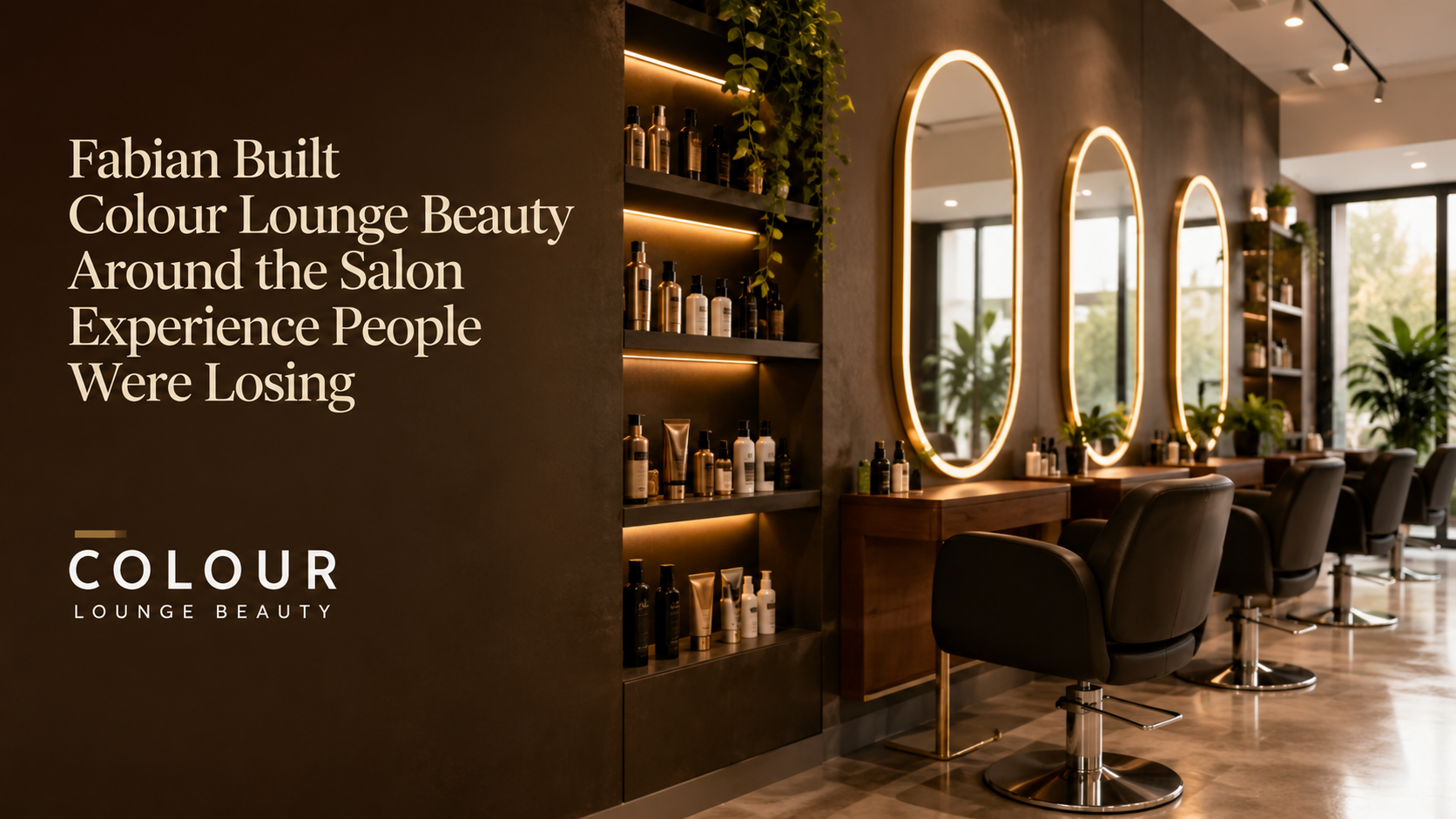
That shift created an opportunity for Fabian and Colour Lounge Beauty. Rather than approaching beauty services as high-speed retail operations, the company appears to have focused on restoring a more deliberate and experience-driven salon environment. In a market crowded with interchangeable beauty concepts, Colour Lounge Beauty seems positioned around customer trust, consistency, and long-term loyalty rather than short-term visibility.
The company’s growth also reflects a broader change in consumer expectations across beauty and wellness markets. Customers increasingly value environments that feel stable and professional instead of overly commercialized. While trends still influence beauty culture heavily, many clients now prioritize reliability and personal attention more than constant reinvention. Fabian appears to have understood that emotional comfort itself was becoming a competitive advantage.
The Problem Colour Lounge Beauty Was Really Solving
For many customers, the frustration with modern beauty salons was not simply inconsistent technical results. The deeper issue was unpredictability. Clients often felt like they were moving through highly standardized service environments where personalization existed mostly in marketing language rather than in the actual customer experience. Colour Lounge Beauty entered a market where people increasingly wanted salons that felt attentive instead of automated.
The issue extended beyond hair and beauty treatments themselves. Many salons became heavily dependent on rapid appointment turnover, reducing customer interactions into tightly managed schedules focused primarily on efficiency. While that approach improved short-term profitability, it often weakened long-term client loyalty. Fabian’s company appears to have recognized that beauty services remain relationship-based businesses even in highly commercial markets.
There was also growing fatigue around trend-driven beauty culture. Customers were constantly encouraged to pursue new styles, products, or aesthetic routines at a pace that could feel exhausting rather than enjoyable. Colour Lounge Beauty seems positioned around a calmer and more measured customer experience, where consistency and confidence matter more than chasing every temporary trend.
Why Fabian Saw the Industry Differently
What separates Fabian from many founders in the beauty space is the apparent understanding that trust compounds more slowly, but more powerfully, than attention. Beauty businesses often focus heavily on visibility, social media presence, and trend alignment because those strategies generate immediate engagement. Fabian’s approach appears more grounded in customer retention and experience quality than in constant promotional momentum.
That mindset changes how a salon business operates internally. Companies optimized primarily for visibility tend to prioritize rapid scaling, aggressive marketing, and fast service cycles. Colour Lounge Beauty seems more focused on creating an environment customers repeatedly return to over long periods of time. In service industries, that consistency can become significantly more valuable than short-term growth spikes.
There is also a notable difference in how the company appears to define luxury. Many beauty businesses equate luxury with exclusivity or visual aesthetics alone. Fabian’s approach seems more connected to reliability, comfort, and professionalism. That quieter interpretation of premium service may resonate more strongly with customers increasingly exhausted by performative branding.
What Made Fabian Different From Competitors
One of the clearest differences between Fabian and competitors is the apparent refusal to turn the salon experience entirely into a social media product. Many beauty businesses now design environments primarily for online visibility, emphasizing aesthetics that photograph well but do not necessarily improve customer comfort or service quality. Colour Lounge Beauty appears more grounded in the actual client experience rather than purely digital presentation.
That philosophy likely influences operational decisions as well. Customers tend to remain loyal to salons where service quality feels dependable and personal. Fabian’s company seems focused on consistency and relationship-building instead of treating every appointment as an isolated transaction. In beauty services, repeat trust often determines long-term business stability more than rapid customer acquisition.
The communication style also appears more restrained than many competitors in the beauty sector. Salons frequently rely on exaggerated transformation narratives or trend-heavy marketing to maintain relevance online. Colour Lounge Beauty seems more measured in tone, which can create stronger credibility among customers looking for professionalism instead of hype-driven branding.
The Decision That Changed Colour Lounge Beauty
One defining decision for Colour Lounge Beauty appears to have been prioritizing customer retention and service consistency over rapid expansion. Many beauty businesses attempt to scale quickly through multiple locations, high-volume appointment systems, or heavily promotional growth strategies. Fabian’s company seems to have taken a more controlled path focused on preserving experience quality.
That decision likely limited certain short-term growth opportunities. Rapid scaling often creates stronger market visibility and immediate revenue acceleration. Yet it can also weaken service consistency and dilute company culture, particularly in industries where customer experience depends heavily on individual relationships and operational discipline. By growing more carefully, Colour Lounge Beauty may have protected the very qualities that attracted loyal customers initially.
The choice also revealed something important about leadership priorities. It suggested the company viewed reputation as more valuable than aggressive expansion speed. In service-based industries, where customer trust directly shapes long-term profitability, that restraint can become a major competitive advantage.
Turning Mission Into Operations
Many beauty businesses speak publicly about customer care and personalized service, but operational systems usually determine whether those claims feel genuine. Colour Lounge Beauty appears focused on translating those values into practical execution through appointment quality, customer consistency, and service professionalism rather than relying entirely on branding language.
Operational discipline matters particularly in salons because customer loyalty depends heavily on predictability. Clients expect not only strong technical outcomes, but also reliable communication, comfortable environments, and consistent service standards. Fabian’s company seems aware that trust is maintained operationally through repeated positive experiences rather than marketing promises alone.
Internal culture likely plays a significant role as well. Service businesses often struggle during growth because operational pressure weakens alignment between customer expectations and staff execution. Colour Lounge Beauty appears more deliberate in preserving coherence between the company’s public identity and the actual salon experience. That consistency becomes increasingly valuable as competition intensifies.
The Difficult Reality of Scaling
Scaling a beauty service business remains difficult despite the size of the global wellness industry. Staffing pressures, rising operational costs, changing beauty trends, and customer retention challenges all create significant complexity. For Fabian, expanding Colour Lounge Beauty likely required balancing growth ambitions against the risk of weakening service quality.
Competition adds another layer of pressure. Large beauty chains possess greater marketing budgets, broader brand recognition, and stronger purchasing leverage than independent salon businesses. Companies like Colour Lounge Beauty therefore compete differently, relying more heavily on customer loyalty and experience quality than sheer visibility. That strategy can work effectively, but it demands operational patience.
There is also the challenge of preserving identity during growth. Businesses that initially succeed through personal attention often struggle to maintain that atmosphere once operations become larger and more structured. Fabian’s leadership likely involves protecting the company’s service culture while adapting to commercial realities. That balance becomes increasingly difficult over time.
Economic uncertainty further complicates the situation. Beauty services are closely tied to consumer spending confidence, meaning market slowdowns can affect customer behavior quickly. Maintaining operational stability during those periods requires careful management rather than aggressive expansion instincts.
What Fabian’s Story Actually Reveals
The rise of Fabian and Colour Lounge Beauty reflects a broader shift in how consumers evaluate service-based businesses. Customers increasingly reward environments that feel reliable, calm, and genuinely attentive instead of aggressively optimized for visibility. In many ways, the beauty industry is rediscovering that consistency often creates stronger loyalty than constant reinvention.
What makes this story notable is not dramatic disruption or trend-driven expansion. It is the quieter argument that trust, professionalism, and operational restraint may ultimately build more durable businesses than attention alone. In industries built around personal experience, reliability remains one of the hardest qualities to replicate.