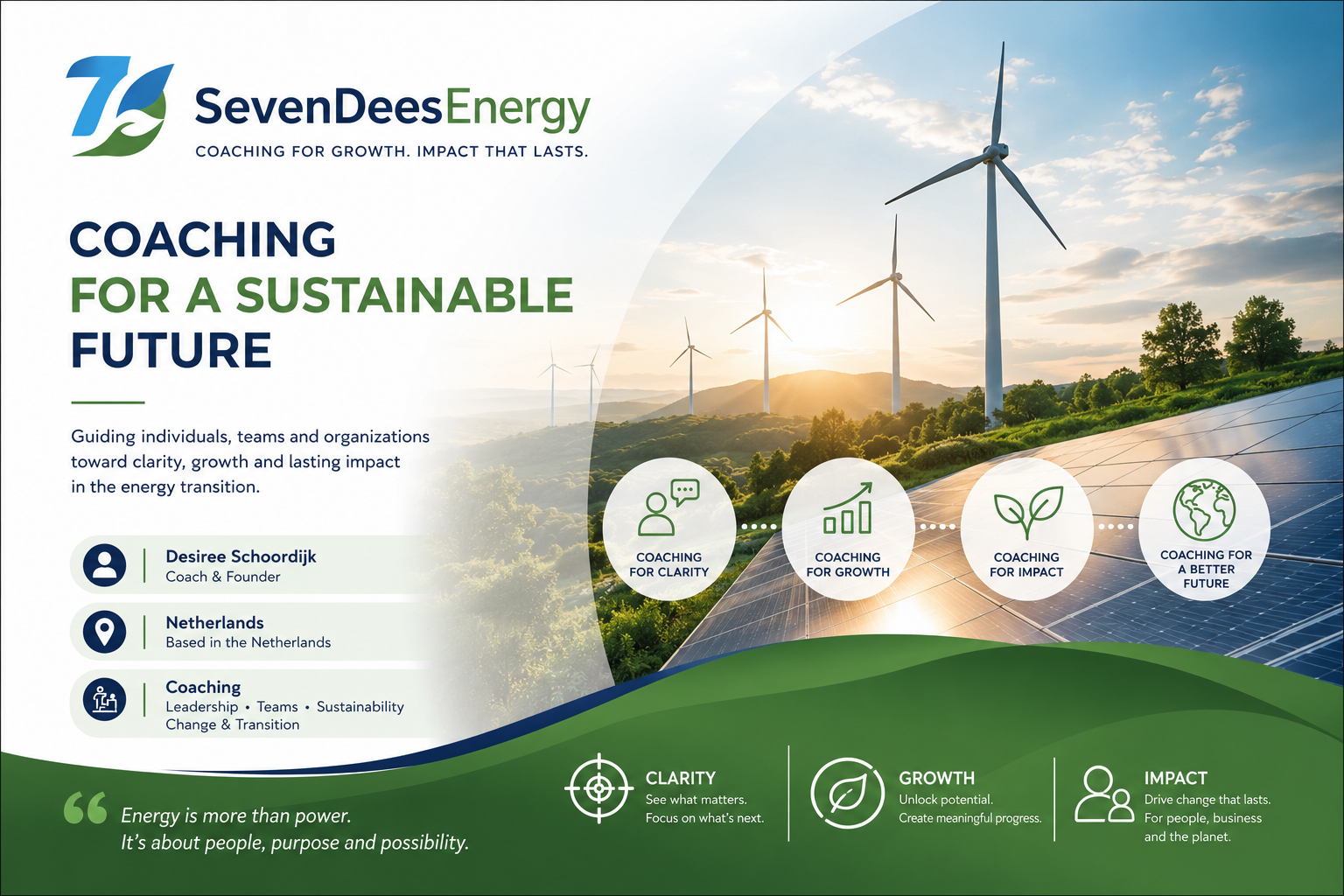
Energy markets across Europe are undergoing one of the most difficult transitions in modern industrial history. Governments continue pushing aggressive sustainability targets while businesses and consumers face rising operational costs, infrastructure pressure, and uncertainty around long-term energy reliability. Renewable energy is no longer treated as a niche environmental issue. It has become a commercial, geopolitical, and operational necessity that affects everything from manufacturing to household economics. Yet despite enormous investment flowing into the sector, many organizations still struggle to navigate the complexity of modern energy systems.
That environment created the opportunity for Desiree Schoordijk and SevenDeesEnergy, a company positioned around practical energy solutions and long-term operational sustainability rather than abstract climate messaging alone. Instead of approaching energy transition as purely a political or environmental conversation, the company appears focused on helping businesses and consumers adapt to changing energy realities in ways that are financially and operationally manageable. The strategy reflects an understanding that successful sustainability efforts depend not only on ambition, but on infrastructure people can realistically adopt and maintain.
For Schoordijk, the challenge extended beyond building another renewable-focused energy company in an increasingly crowded market. The deeper issue involved trust and practicality. Businesses support sustainability goals publicly, but operational decisions are ultimately shaped by cost stability, reliability, and implementation risk. SevenDeesEnergy appears to have positioned itself inside that tension, offering solutions designed around operational realism instead of idealized transition narratives disconnected from everyday business pressures.
The Problem SevenDeesEnergy Was Really Solving
One of the largest frustrations inside modern energy markets is the growing gap between sustainability ambition and operational simplicity. Companies are encouraged to modernize energy systems rapidly while simultaneously managing unpredictable costs, infrastructure limitations, and regulatory complexity. Many organizations support renewable adoption conceptually but struggle with how to implement meaningful change without creating additional operational instability.
SevenDeesEnergy appears to have approached this problem by focusing on energy transition as both a commercial and operational challenge. The company’s positioning suggests an effort to help businesses and consumers navigate changing energy expectations through practical systems rather than purely symbolic sustainability initiatives. Desiree Schoordijk seemed to recognize early that renewable adoption becomes difficult when organizations perceive it as financially uncertain or operationally disruptive.
Another challenge affecting energy markets involves information fragmentation. Businesses are constantly exposed to changing regulations, new technologies, shifting government incentives, and competing infrastructure solutions that make long-term planning increasingly difficult. SevenDeesEnergy appears to have responded by emphasizing clarity and structured implementation rather than adding additional complexity to an already confusing market.
The company also entered an industry increasingly shaped by public scrutiny and urgency. Consumers expect cleaner energy systems, but they also expect reliability and affordability. Schoordijk’s strategy appears aligned with the growing demand for energy companies capable of balancing sustainability goals with realistic operational performance.
Why Desiree Schoordijk Saw the Industry Differently
Desiree Schoordijk appears to approach energy transition with a stronger focus on practical implementation than many businesses operating inside renewable markets. While much of the energy conversation centers around future ambitions and policy targets, Schoordijk’s strategy seems grounded in the realities businesses and consumers face today. That distinction matters because organizations rarely adopt new infrastructure based purely on ideological alignment. They adopt systems when operational risks become manageable.
Part of her perspective likely comes from understanding how exhausting energy uncertainty has become for many businesses. Companies are dealing simultaneously with rising costs, supply instability, regulatory pressure, and sustainability expectations. SevenDeesEnergy appears more interested in helping organizations navigate those realities gradually and strategically instead of promoting unrealistic transition timelines disconnected from operational capacity.
Schoordijk also seemed to recognize that trust in energy sectors must be earned carefully. Consumers and businesses have become increasingly skeptical of exaggerated sustainability claims and infrastructure promises that fail under real-world conditions. SevenDeesEnergy’s positioning suggests a stronger emphasis on reliability, transparency, and measurable operational value instead of relying heavily on environmental branding alone.
There is also a broader cultural shift reflected in this strategy. Energy is increasingly viewed not just as infrastructure, but as part of long-term business resilience and economic stability. Schoordijk’s leadership appears connected to that evolving understanding, positioning sustainability as a practical operational necessity rather than a purely reputational exercise.
What Made Desiree Schoordijk Different From Competitors
One of the clearest differences between Desiree Schoordijk and many competitors was the company’s apparent focus on operational realism rather than oversized sustainability promises. In renewable energy markets, businesses often compete aggressively through ambitious projections and large-scale future positioning. SevenDeesEnergy instead appears more grounded in practical implementation and customer usability.
Another differentiator involved communication style. Many energy providers overwhelm clients with technical complexity, policy language, and infrastructure jargon that makes adoption feel intimidating for organizations without dedicated energy specialists. Schoordijk’s approach appears more accessible and commercially focused. The company seems interested in helping customers understand how energy changes affect daily operations instead of treating sustainability discussions as purely technical exercises.
The brand also appears disciplined in maintaining a consistent operational identity. Renewable sectors move rapidly through technological trends and policy cycles, creating pressure for companies to constantly reposition themselves publicly. SevenDeesEnergy seems more focused on maintaining long-term customer trust and infrastructure reliability rather than chasing every emerging market narrative.
Customer relationships likely became another important advantage. Energy infrastructure decisions involve significant long-term commitment, meaning clients value stability and responsiveness highly. Schoordijk’s leadership style appears aligned with that expectation, emphasizing reliability and operational clarity over purely promotional visibility.
The Decision That Changed SevenDeesEnergy
For SevenDeesEnergy, one of the most important strategic decisions appears to have been focusing on scalable operational sustainability instead of aggressive expansion built purely around market hype. Many renewable companies expand rapidly when public and investor enthusiasm peaks, only to encounter operational strain once infrastructure demands increase. SevenDeesEnergy appears to have taken a more measured approach focused on long-term stability.
Desiree Schoordijk’s strategy seems centered on controlled growth and implementation reliability rather than visibility alone. Instead of positioning the company around dramatic transformation messaging, SevenDeesEnergy appears more interested in helping customers adopt energy solutions that remain sustainable operationally and financially over time. That decision likely strengthened customer confidence because energy infrastructure depends heavily on predictability and trust.
The strategy also reflected an understanding that energy businesses survive through operational credibility more than public excitement. Customers become loyal when systems function consistently under pressure, not when companies generate attention temporarily through marketing campaigns. SevenDeesEnergy’s approach appears closely connected to that operational mindset.
That patience may create slower public recognition compared to highly visible energy startups, but infrastructure sectors often reward disciplined execution more sustainably than short-term momentum.
Turning Mission Into Operations
An energy company’s mission becomes meaningful only when customers experience measurable operational value. For SevenDeesEnergy, that likely meant focusing heavily on implementation quality, infrastructure reliability, and customer support instead of relying solely on environmental positioning. In energy markets, operational execution directly shapes long-term trust.
Execution therefore becomes critical. Businesses and consumers depend on energy infrastructure continuously, meaning even minor reliability failures can damage confidence quickly. SevenDeesEnergy appears to have emphasized operational consistency because sustainability systems only remain viable when they function dependably under real-world conditions.
Another operational advantage likely came from understanding changing customer priorities. Modern businesses increasingly evaluate energy decisions through multiple factors simultaneously, including cost management, regulatory alignment, sustainability expectations, and long-term operational resilience. Schoordijk’s strategy seems aligned with those broader business realities instead of treating renewable adoption as a purely environmental conversation.
The company’s broader positioning also reflects changing expectations across infrastructure industries. Customers increasingly want providers that feel understandable, transparent, and operationally reliable rather than businesses driven mainly by promotional sustainability language.
The Difficult Reality of Scaling
Scaling energy infrastructure businesses introduces pressure that extends far beyond customer acquisition alone. As companies grow, they must manage supply chains, implementation quality, regulatory requirements, pricing volatility, and customer reliability expectations simultaneously. Even well-designed systems can encounter operational strain once demand expands faster than infrastructure capacity.
Desiree Schoordijk likely faced the challenge common to many energy founders: balancing expansion opportunities against operational consistency. Expanding too quickly can weaken service reliability and implementation quality, while expanding too cautiously risks losing competitiveness inside rapidly evolving renewable markets. Managing that balance requires operational discipline that many infrastructure businesses struggle to maintain during growth periods.
Competition also intensified as larger corporations increased investment in renewable infrastructure and energy transition services. Smaller providers increasingly compete not only on technology but also on responsiveness, implementation support, and customer trust. That forces companies like SevenDeesEnergy to differentiate through operational reliability and long-term relationships instead of scale alone.
Public scrutiny surrounding energy sectors has also increased significantly. Consumers and regulators increasingly question pricing transparency, sustainability claims, and infrastructure performance. Maintaining credibility under those conditions requires careful alignment between operational execution, customer communication, and long-term strategic positioning.
What Desiree Schoordijk’s Story Actually Reveals
The story of Desiree Schoordijk and SevenDeesEnergy reflects a broader shift happening across global energy systems. Businesses and consumers are becoming less interested in sustainability messaging alone and more focused on infrastructure capable of functioning reliably under economic and operational pressure. Clean energy is increasingly evaluated through practicality, stability, and long-term resilience rather than aspiration alone.
Schoordijk’s approach also highlights how modern energy founders increasingly succeed through operational understanding instead of purely technological ambition. Customers want systems that improve efficiency and sustainability without creating unnecessary complexity or instability. In that sense, SevenDeesEnergy represents more than an energy company. It reflects the growing demand for infrastructure businesses built around realistic transition strategies, disciplined execution, and long-term trust.