Most companies do not struggle because they lack software. They struggle because their systems rarely communicate in ways that reflect how businesses actually operate. Departments rely on disconnected workflows, reporting becomes inconsistent across teams, and operational decisions slow down as employees move between fragmented systems. For many organizations, enterprise software promised efficiency while quietly creating additional layers of complexity.
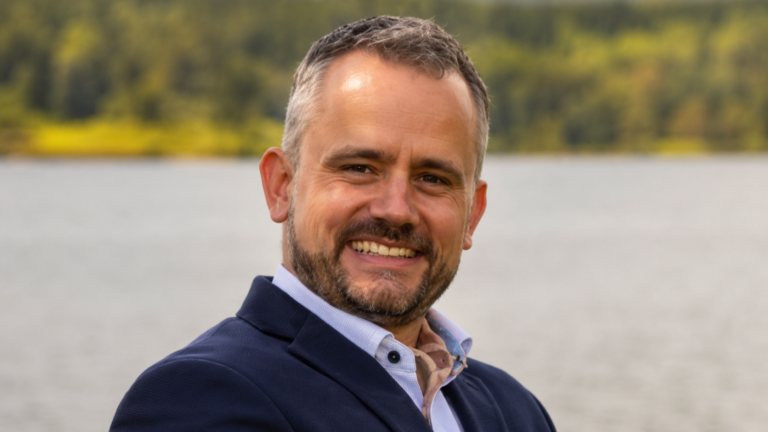
That tension became central to the thinking behind Ketil Skrettingland and ERP Service AS, a company focused on helping businesses manage operational systems with greater clarity and continuity. While many firms in the enterprise software market competed through scale, customization, or aggressive feature expansion, Skrettingland appeared more interested in the practical realities companies faced once software moved from implementation into daily use.
The timing of that approach mattered. Businesses increasingly depended on integrated systems to manage operations, customer relationships, supply chains, and financial reporting simultaneously. Yet many organizations discovered that adding more software did not automatically improve coordination. ERP Service AS positioned itself around making enterprise systems more usable, connected, and operationally reliable instead of treating digital transformation as a purely technical exercise.
The Problem ERP Service AS Was Really Solving
For years, companies invested heavily in enterprise resource planning systems with the expectation that automation would naturally improve efficiency. In practice, many organizations encountered new operational problems after implementation. Teams struggled with difficult workflows, reporting structures became fragmented, and employees often adapted their processes around software limitations rather than the software adapting to operational needs.
ERP Service AS approached those frustrations differently. Instead of viewing ERP systems as standalone technical infrastructure, the company appeared focused on how businesses actually functioned under operational pressure. Skrettingland seemed to understand that enterprise software only becomes valuable when it improves coordination instead of increasing administrative friction.
The challenge became even more visible as businesses expanded across distributed operations and digital environments. Companies needed systems capable of handling inventory management, financial oversight, customer communication, and operational reporting simultaneously. Many existing solutions were technically capable but operationally difficult to manage. ERP Service AS positioned itself around improving usability and workflow continuity rather than overwhelming clients with unnecessary system complexity.
There was also a broader shift occurring inside enterprise technology markets. Businesses were becoming less impressed by oversized implementation promises and more focused on long-term operational outcomes. ERP Service AS benefited from recognizing that companies increasingly wanted systems that reduced confusion, simplified processes, and supported sustainable operational growth instead of forcing organizations into constant adaptation cycles.
Why Ketil Skrettingland Saw the Industry Differently
Some founders in enterprise software focus primarily on technical architecture or product expansion. Ketil Skrettingland appeared more focused on operational functionality and long-term usability instead. That distinction shaped ERP Service AS in important ways because many organizations already had access to enterprise software. What they lacked was confidence that those systems genuinely supported how their businesses operated day to day.
Skrettingland’s perspective reflected an understanding that ERP systems influence organizational behavior directly. When software workflows are difficult to navigate or poorly integrated, inefficiencies spread quickly across departments. Reporting delays, communication gaps, and operational inconsistency become management problems rather than isolated technical issues. ERP Service AS seemed designed around reducing those pressures instead of simply adding new layers of functionality.
There was also a noticeable emphasis on practicality over spectacle. Enterprise technology markets often reward companies that market ambitious automation narratives or highly complex infrastructures. Skrettingland’s approach appeared more restrained and operationally grounded. The company focused on helping organizations improve coordination and reliability in measurable ways rather than relying on oversized transformation language.
That mindset also suggested a longer-term view of enterprise software adoption. Many businesses rush through implementation phases without fully considering how systems will function operationally years later. ERP Service AS appeared more focused on continuity, usability, and operational sustainability than on short-term implementation milestones alone.
What Made Ketil Skrettingland Different From Competitors
The ERP sector is filled with providers promising integration, automation, and operational efficiency. Ketil Skrettingland differentiated ERP Service AS by concentrating more directly on operational clarity and workflow stability. The company appeared less interested in overwhelming customers with technical complexity and more focused on helping organizations reduce friction inside everyday business operations.
That distinction mattered because many companies were exhausted by software ecosystems that required extensive management simply to remain functional. Businesses increasingly wanted systems that improved visibility and coordination without forcing employees into constant retraining or procedural workarounds. ERP Service AS positioned itself around reducing operational stress rather than adding more technological layers to already complicated environments.
Another differentiator was the company’s emphasis on long-term reliability. Enterprise systems affect nearly every area of an organization, from finance and procurement to customer management and reporting. Failures inside those systems quickly become expensive. Skrettingland’s approach suggested a recognition that trust in enterprise software is built through consistency and usability rather than aggressive branding alone.
The company’s positioning also reflected a broader understanding of organizational pressure. Businesses do not adopt ERP systems simply to modernize appearances. They adopt them to improve operational coordination under increasingly demanding conditions. ERP Service AS appeared focused on supporting those realities in practical, sustainable ways instead of treating enterprise technology as a purely technical category.
The Decision That Changed ERP Service AS
One defining decision for ERP Service AS appears to have been prioritizing operational integration and workflow usability over aggressive product expansion. In enterprise software markets, there is constant pressure to broaden capabilities, introduce additional modules, and compete through technical scale. Many providers pursue growth by increasing system complexity, assuming larger ecosystems automatically create stronger competitive positioning.
Skrettingland’s approach suggested a different calculation. Rather than overwhelming organizations with unnecessary functionality, ERP Service AS appeared focused on improving how systems interacted with real business operations. That decision likely reduced opportunities to market expansive software portfolios, but it strengthened the company’s ability to deliver more stable operational outcomes.
The risk behind that strategy was substantial. Competitors emphasizing aggressive innovation and large-scale digital transformation narratives often dominate industry visibility quickly. Businesses can also assume broader functionality automatically creates greater value. Choosing workflow clarity and operational continuity over expansion-driven positioning requires confidence that long-term customer trust will outweigh short-term market attention.
What the decision ultimately revealed was a stronger understanding of customer fatigue inside enterprise technology environments. Many organizations were already struggling with fragmented systems and difficult implementation experiences. ERP Service AS recognized that reducing operational complexity could become a more valuable differentiator than simply increasing technical scope.
Turning Mission Into Operations
Operational credibility depends on whether a company’s internal decisions align with its public positioning. ERP Service AS appeared to structure its operations around usability, integration, and long-term workflow continuity rather than treating ERP implementation as a short-term technical exercise. That operational focus became increasingly important as businesses demanded systems capable of supporting faster and more coordinated decision-making.
The company’s approach also reflected an understanding that ERP systems influence organizational culture. Delayed reporting, inconsistent workflows, and fragmented operational visibility can slow decision-making across entire businesses. ERP Service AS seemed positioned around helping organizations improve coordination internally rather than simply deploying software infrastructure and moving on.
Hiring and internal operational discipline likely played a role as well. Companies working with enterprise systems cannot afford operational inconsistency because customers experience those weaknesses directly through implementation, training, and support processes. Skrettingland’s leadership style appeared grounded in practical execution and long-term operational reliability instead of purely expansion-focused growth strategies.
There was also an emphasis on sustainability in workflow design. Many organizations adopt enterprise systems that become increasingly difficult to manage over time due to customization overload and fragmented reporting structures. ERP Service AS appeared focused on helping businesses maintain operational clarity as they scaled rather than allowing complexity to accumulate unchecked.
The Difficult Reality of Scaling
Scaling enterprise software companies creates challenges that are often underestimated externally. As customer bases grow, maintaining implementation quality, support responsiveness, and operational consistency becomes significantly more difficult. Ketil Skrettingland faced the same pressures affecting many modern ERP providers: balancing growth, customer expectations, and long-term system reliability simultaneously.
The market itself also became increasingly demanding. Businesses now expect ERP systems to integrate seamlessly across operations while remaining intuitive and adaptable. That combination creates constant pressure on providers to improve functionality without introducing unnecessary complexity. Maintaining that balance becomes harder as organizational environments become more interconnected and technically dependent.
There is also the challenge of competing inside a crowded enterprise technology market. Larger providers benefit from stronger brand recognition and extensive infrastructure advantages, while smaller firms often compete aggressively through pricing or niche specialization. ERP Service AS needed to maintain differentiation through operational usability and reliability instead of entering unsustainable competition around feature volume alone.
Leadership pressure intensifies under those conditions. Customers increasingly depend on ERP systems for operational continuity, which means failures can quickly affect productivity, reporting accuracy, and financial oversight. Skrettingland’s approach required maintaining customer trust while adapting to evolving business demands and technological expectations.
What Ketil Skrettingland‘s Story Actually Reveals
The story surrounding Ketil Skrettingland and ERP Service AS reflects a broader shift in how businesses evaluate enterprise technology. Companies are no longer searching only for more advanced systems. They are searching for systems that reduce operational confusion and improve coordination across increasingly complex organizations.
ERP Service AS suggests that simplicity, when executed effectively, may become one of the most valuable advantages inside enterprise software markets. Skrettingland’s approach reflects an understanding that operational trust is built through reliability, usability, and consistency rather than through technical excess alone. In industries built around complexity, the companies that make operations feel more manageable may ultimately hold the strongest long-term relevance.