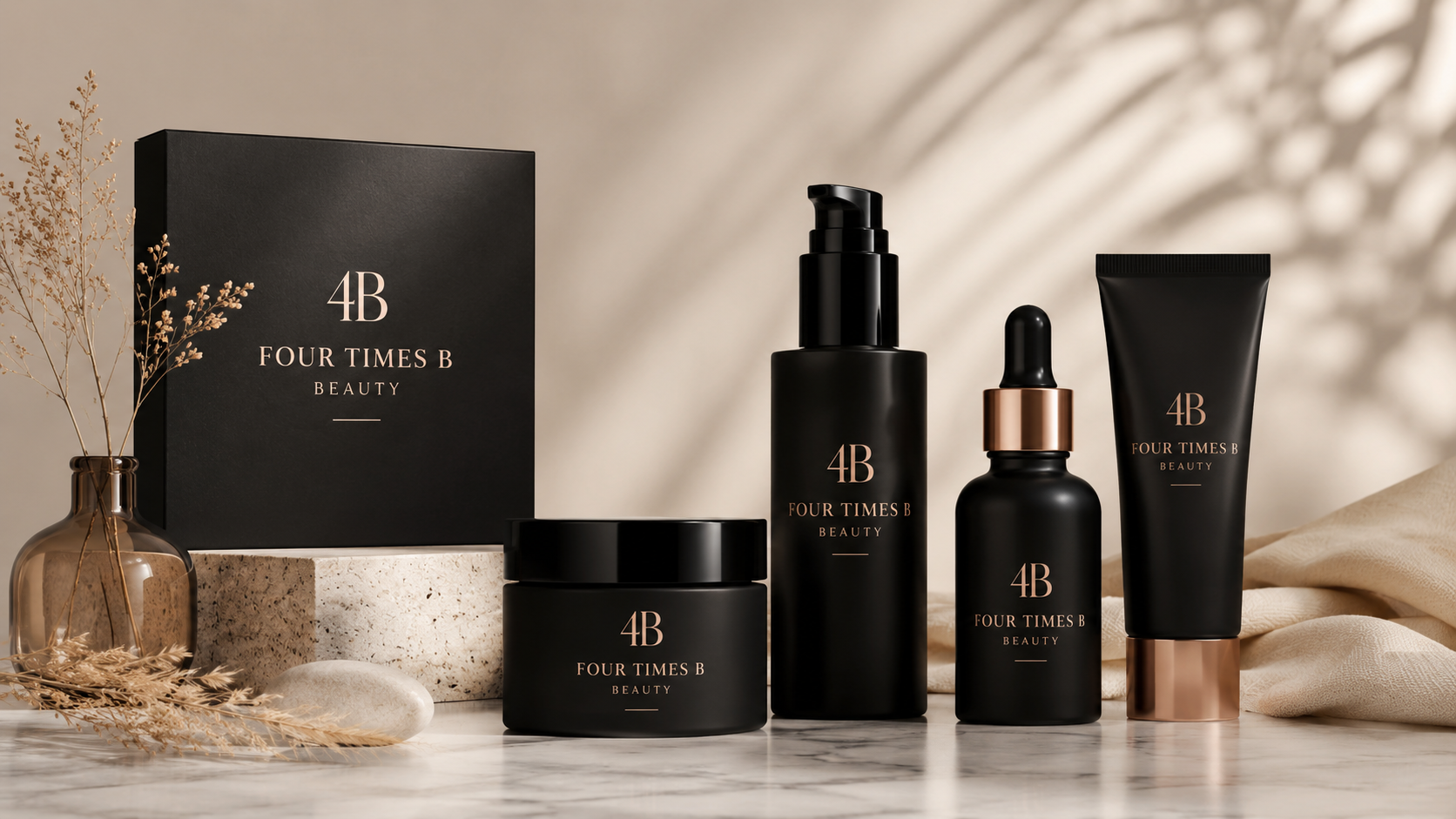
Beauty consumers have become harder to impress and even harder to keep. Social media exposes customers to thousands of products, treatments, and trends every day, yet much of the industry still depends on repetition disguised as innovation. New packaging, familiar formulas, louder branding, and increasingly aggressive promises dominate a market where trust often disappears faster than trends themselves. Alexander Pijpers entered that environment with Four Times B Beauty, a company shaped around a different understanding of what modern beauty customers actually value.
Rather than building the business entirely around appearance or hype, Pijpers focused on the relationship between beauty, consistency, and customer confidence. That distinction became increasingly important as consumers grew more skeptical of companies promising dramatic transformations through endless product cycles. Four Times B Beauty positioned itself around quality, reliability, and a customer experience designed to feel more grounded than performative. In a category crowded with noise, the company’s quieter positioning became part of its identity.
That approach reflected a broader shift happening across the beauty industry. Customers no longer separate products from the values and operational behavior of the businesses selling them. They pay closer attention to consistency, transparency, and whether a company’s promises hold up over time. Alexander Pijpers built Four Times B Beauty around the idea that trust itself had become one of the beauty industry’s most valuable products.
The Problem Four Times B Beauty Was Really Solving
The beauty industry often creates confusion while claiming to offer clarity. Consumers are encouraged to follow increasingly complicated routines involving dozens of products and constantly changing recommendations. Many customers eventually become frustrated not because they lack options, but because too many brands make similar promises without delivering dependable experiences. Four Times B Beauty recognized that modern consumers were searching for simplicity and confidence as much as visible results.
That realization shaped the company’s approach to customer relationships. Instead of presenting beauty as a constant race toward perfection, the business focused on creating routines and experiences customers could realistically maintain. In practical terms, that meant emphasizing consistency over novelty and long-term customer trust over temporary attention. Businesses that rely entirely on trend momentum often struggle to retain loyalty once consumer excitement fades.
There was also a deeper issue inside the market: emotional exhaustion. Beauty consumers are increasingly aware of how aggressively the industry markets insecurity. Four Times B Beauty positioned itself differently by creating a calmer and more measured customer experience. That subtle change helped the company separate itself from competitors relying heavily on urgency-driven marketing tactics designed to push constant consumption.
Why Alexander Pijpers Saw the Industry Differently
Alexander Pijpers appeared to understand that beauty businesses increasingly operate inside an attention economy where visibility can easily replace substance. Many companies chase relevance through constant product launches, viral campaigns, and influencer partnerships because online momentum feels necessary for survival. Yet customers eventually become fatigued by brands that appear to reinvent themselves every few months. Pijpers built Four Times B Beauty around steadiness rather than constant reinvention.
That philosophy influenced how the company approached growth and branding. Four Times B Beauty did not position itself as a company trying to dominate every beauty category simultaneously. Instead, the business focused on building a recognizable identity connected to trust, customer comfort, and product consistency. Those priorities may generate slower visibility initially, but they often create stronger long-term customer retention.
Pijpers also seemed less interested in selling unrealistic transformation narratives than many competitors in the industry. The company’s positioning reflected a more grounded understanding of how consumers actually engage with beauty and self-care. Customers increasingly value businesses that make them feel supported rather than pressured. That emotional distinction became an important part of Four Times B Beauty’s identity.
What Made Alexander Pijpers Different From Competitors
One of the clearest differences between Alexander Pijpers and many competitors was operational discipline. Beauty brands often become trapped chasing trends because constant novelty appears necessary for maintaining online attention. Four Times B Beauty took a more controlled approach by emphasizing customer trust and consistency instead of reacting to every market shift.
The company also approached branding differently. Many beauty businesses rely heavily on aspirational marketing that creates distance between the brand and everyday customers. Four Times B Beauty built a more accessible identity that focused on practicality and emotional comfort alongside aesthetics. That positioning made the company feel less intimidating and more relatable in a market often dominated by exaggerated perfection.
Another important distinction was customer experience. Businesses frequently underestimate how strongly consistency influences loyalty inside beauty industries. Customers return to brands and services that feel dependable even when competitors offer louder marketing or lower prices. Alexander Pijpers understood that retention in beauty often depends more on emotional reliability than constant innovation alone.
The Decision That Changed Four Times B Beauty
The defining decision behind Four Times B Beauty was refusing to build the business entirely around short-term trend momentum. Many beauty companies achieve rapid visibility by aggressively adapting to every new aesthetic, product category, or social media obsession. While that strategy can generate fast commercial growth, it often weakens long-term trust because the business begins to feel directionless over time.
Alexander Pijpers chose a steadier path. Four Times B Beauty focused on creating a consistent identity that customers could recognize and rely on rather than constantly reshaping itself for online relevance. That decision influenced branding, product positioning, and the overall customer experience. The company developed around a recognizable philosophy instead of temporary market excitement.
The risk behind that approach was significant. Slower-moving brands sometimes struggle to compete against businesses generating constant attention through aggressive marketing campaigns. In highly visual industries, quieter companies can become overlooked even when their operational quality remains stronger. Yet the same discipline helped Four Times B Beauty avoid becoming interchangeable with countless beauty brands competing for short-term visibility.
Turning Mission Into Operations
A beauty company’s values become meaningful only when they influence operations. Maintaining customer trust requires discipline across product quality, customer communication, fulfillment, branding consistency, and service standards. Alexander Pijpers appeared to understand that operational reliability matters just as much as aesthetic presentation in beauty businesses.
That operational mindset affects how customers experience the company on a practical level. Businesses that grow too quickly often create inconsistencies that damage loyalty, even when branding remains strong. Four Times B Beauty focused on creating smoother and more dependable customer experiences rather than chasing expansion at any cost. That approach likely required stronger internal organization than customers directly see.
The company also reflects how modern beauty brands increasingly function as relationship businesses rather than purely retail businesses. Customers expect transparency, professionalism, and emotional trust alongside product performance. Four Times B Beauty positioned itself around supporting those expectations instead of relying solely on visual marketing to attract attention.
The Difficult Reality of Scaling
Scaling a beauty company creates pressures that are difficult to solve through branding alone. As customer demand increases, maintaining consistency across operations becomes significantly harder. Businesses must manage logistics, customer expectations, staffing, supplier relationships, and competitive pressure simultaneously. Even strong beauty brands can lose customer trust quickly when operational quality begins slipping during growth periods.
Competition inside the beauty industry has also intensified dramatically. Customers compare brands instantly through social media, influencer recommendations, reviews, and online communities. Businesses are expected to maintain constant visibility while also delivering highly personalized customer experiences. That environment creates enormous pressure on founders trying to balance commercial growth with operational discipline.
For Alexander Pijpers, the challenge is not simply making Four Times B Beauty larger. The harder task is protecting the trust-centered identity of the company while navigating growth pressures that often push beauty businesses toward short-term decisions. Many brands become louder as they scale but less emotionally connected to customers. Avoiding that shift requires careful leadership and restraint.
What Alexander Pijpers’s Story Actually Reveals
The story behind Alexander Pijpers and Four Times B Beauty reflects a broader change happening inside modern beauty markets. Consumers are becoming increasingly selective about which companies they trust, especially in industries built around personal confidence and self-image. Visibility alone is no longer enough to sustain loyalty over time.
It also reveals how difficult sustainable growth has become inside highly competitive consumer industries. Businesses must remain commercially relevant without becoming emotionally exhausting for customers. Four Times B Beauty suggests that steadier and more trust-focused companies may ultimately build stronger long-term relationships than brands built entirely around attention cycles.